The Web - World Wide Web
Model Client/Server
The Web uses the internet network to create a global system of information. For the functionment
of the web, we talk about a Client-Server architecture :
- A web page, identifiable via its URL is stocked on a server
- A client (user), communicating with this server thanks to a web browser to obtain
a copy of the wished webpage
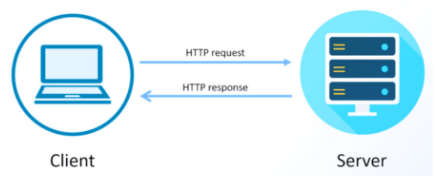
HTTP Request
The communication Client-Server is possible thanks to the HTTP protocol. It defines a set of requests that
indicates the action that we want to execute.
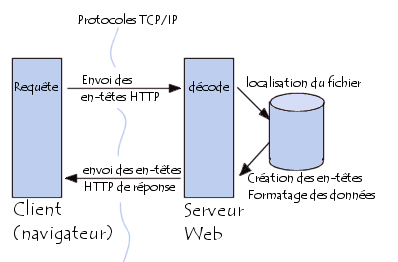
The performances of web sites and applications can be significantly upgraded by reusing ressources previously collected. For that, web browsers uses the "caching" of every uploaded documents via the HTTP protocol by the user. This cache is used to render navigation-available visited documents via the previous/next buttons, the backup, the displaying of the source code, etc. without requiring another round trip aroung the server.